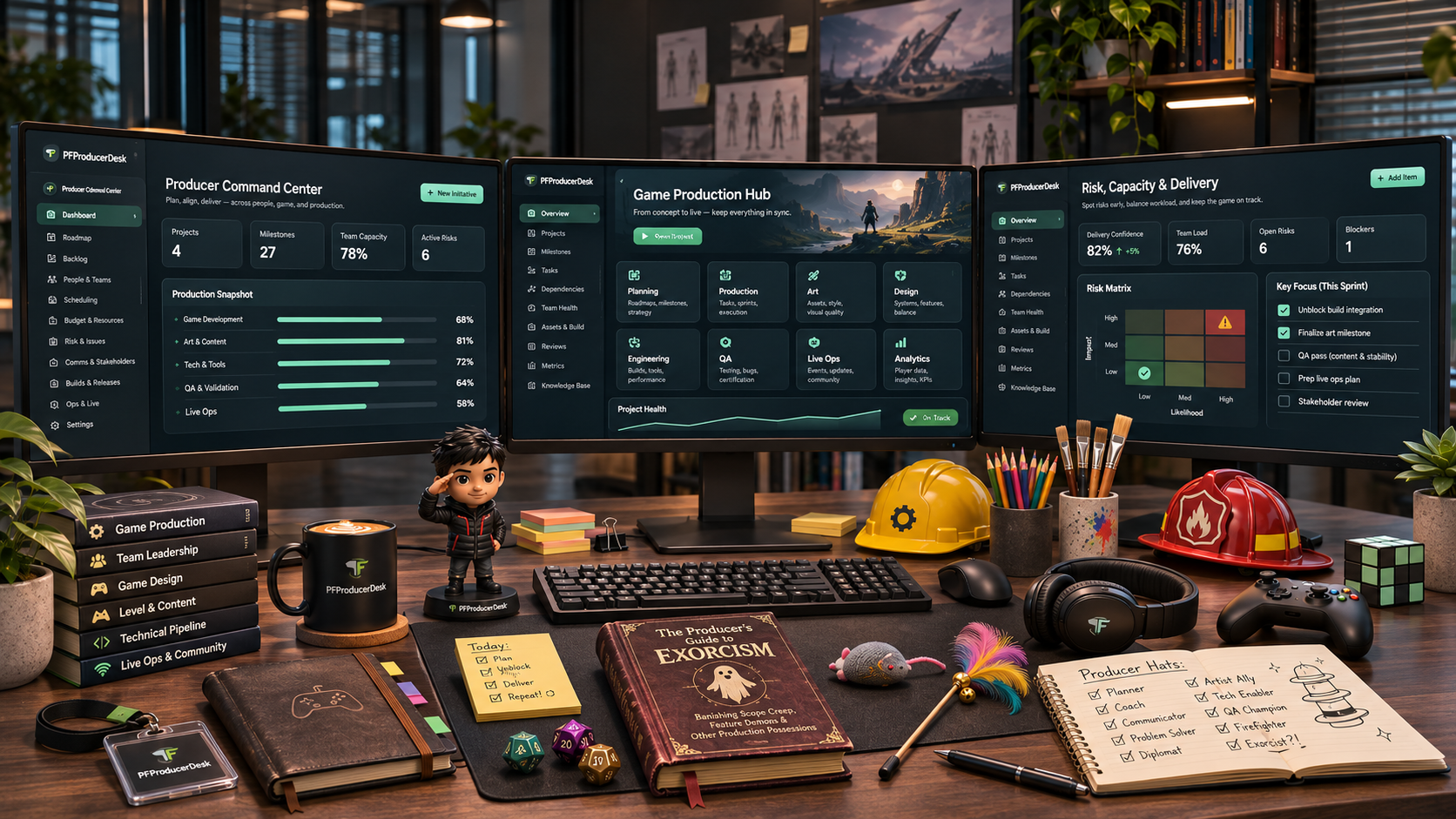
How many hats does a Game Producer actually wear?
After more than 20 years in game development, I’ve worn quite a few hats throughout my career.
And I’m not talking about the ones you wear during a sprint retrospective.
When someone asks what a Game Producer actually does, the usual answers are planning, scheduling, tracking progress, managing resources, and making sure the project gets delivered.
Well… that’s part of it.
But depending on the day, a Producer can also be:
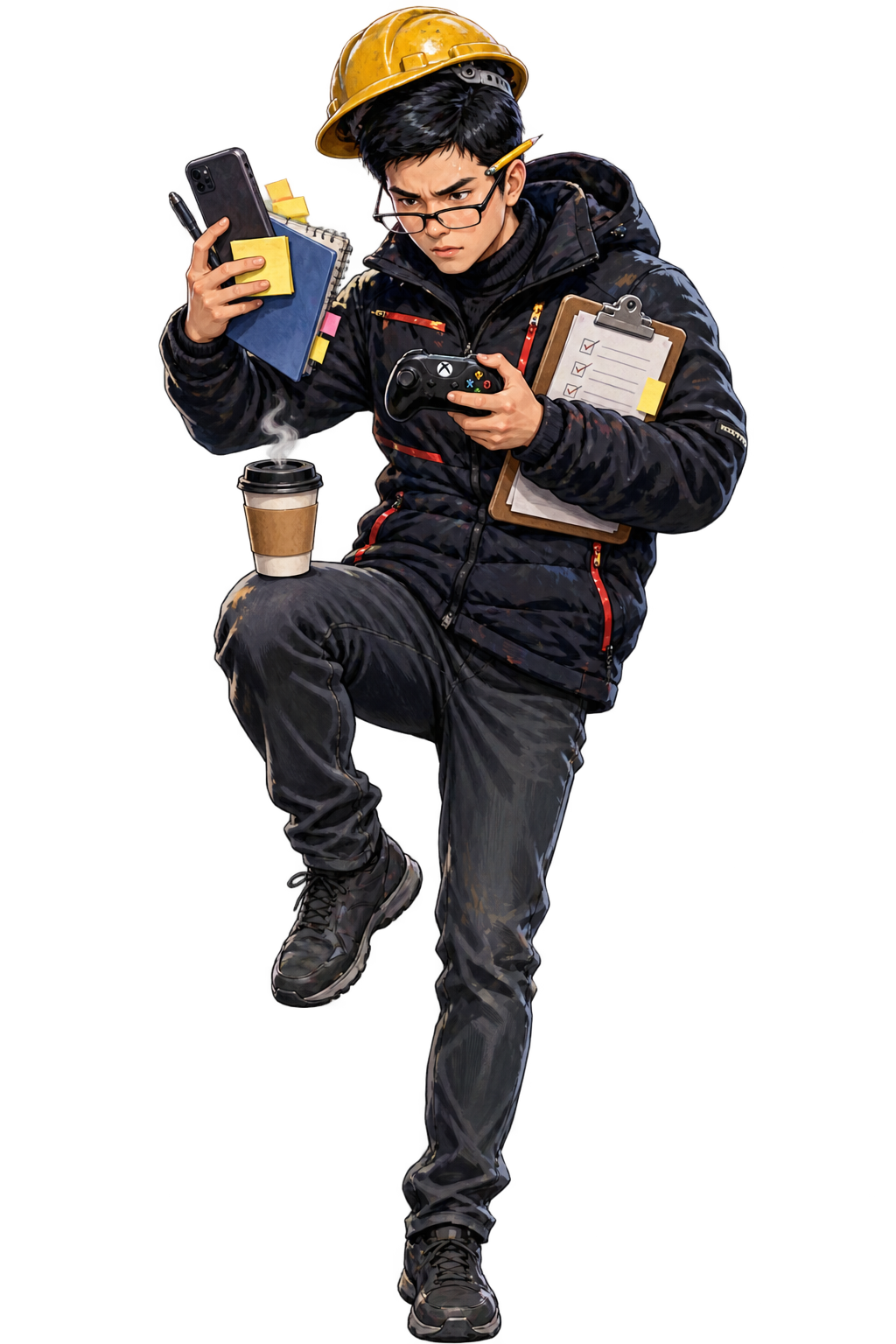
- A Firefighter — When something breaks, a critical deliverable is blocked, or a milestone is suddenly at risk.
- A Diplomat — When different departments have conflicting priorities, and everyone has a perfectly valid reason why theirs should come first.
- A Detective — When a task has been “almost done” for three sprints, and you need to find out what’s really happening.
- A Translator — When you need to turn technical challenges into something stakeholders can understand, and business requirements into something the development team can act on.
- A Negotiator — When there’s more work than time, resources, or budget available.
- A Coach — When someone needs guidance, encouragement, or help overcoming a challenge.
- A Shield — When your team needs protection from unnecessary interruptions, unrealistic expectations, or constantly shifting priorities.
And sometimes, you’re simply the person who listens when someone is having a difficult day.
That last one is something I think we don’t talk about enough.
Production isn’t just about managing deliverables. It’s also about supporting the people responsible for delivering them.
Throughout my career, I’ve learned that understanding a project’s status is important. But understanding the people behind that status is just as important.
A delayed task doesn’t always mean someone isn’t performing well.
Sometimes, they’re blocked. Sometimes, priorities aren’t clear. Sometimes, they’re overloaded. And sometimes, they simply need someone to listen.
This is one of the reasons I’ve always believed in a people-first approach to leadership.
It’s also part of what motivated me to develop T.H.O.R. (Team Health & Operational Resources), a module within my personal PFProducerDesk project, where I’m exploring ways to bring better visibility to team capacity, development goals, and operational challenges.
Not to micromanage people or reduce them to numbers, but to help leaders recognize where their teams might need support.
Because at the end of the day, a Producer’s job isn’t to personally solve every problem. It’s to help create an environment where the team can solve problems effectively.
And perhaps the most important hat we wear is knowing when to take one off and let someone else lead.
Now, I’m curious…
For fellow Producers, PMs, and development leaders: What’s the most unexpected “hat” you’ve had to wear at work?
#GameDevelopment #GameProduction #ProductionManagement #Leadership